
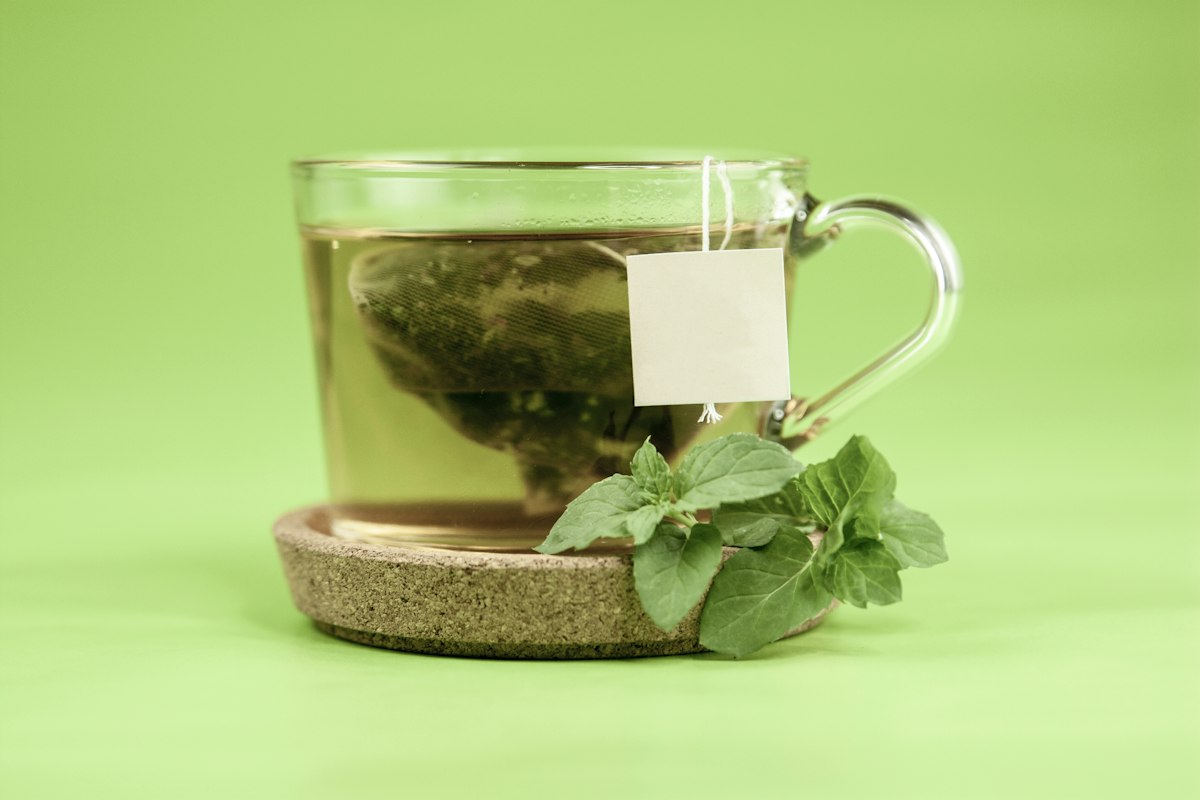
Chamomile is usually a cup you drink hot in the evening. It also makes a very good iced tea: light, floral, slightly apple-like and naturally caffeine-free. It is easy to make at home, and it keeps well in the fridge for a day or two.
This guide covers two simple methods, ways to flavour the tea, and an honest look at chamomile iced tea benefits: what research suggests, what it doesn’t prove, and who should be careful.
Why chamomile works so well iced
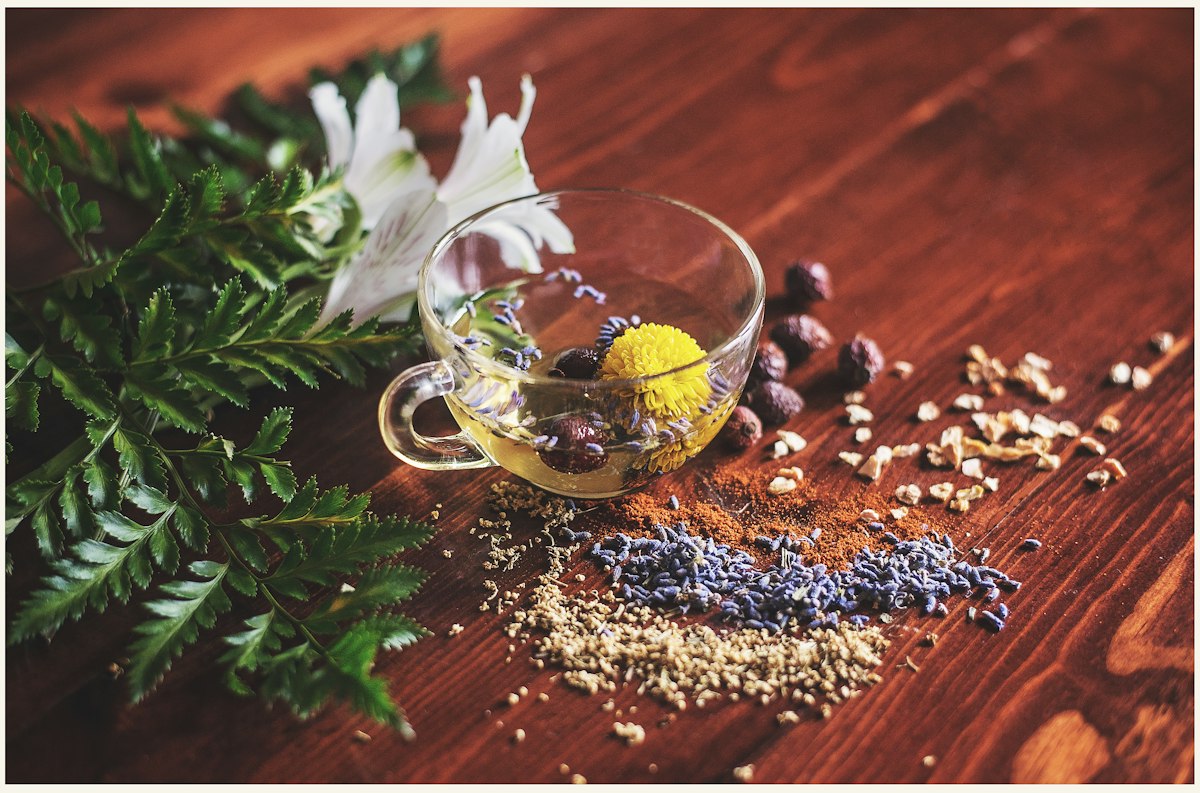
Chamomile has a gentle flavour that doesn’t turn bitter or tannic the way some black and green teas can when chilled. That makes it forgiving. You can brew it a little stronger, chill it, and it still tastes smooth. It also pairs easily with citrus, mint, honey and fruit.
What you need
- Dried chamomile flowers (loose, or tea bags). If you’re choosing, see our selection of herbal teas.
- Water
- Ice
- A jug or large jar with a lid
- A fine strainer (for loose flowers)
- Optional: honey, lemon, fresh mint, sliced fruit
Method 1: Hot-brew, then chill (fastest)
Best when you want iced tea within about an hour.
- Use a little more chamomile than you would for a hot cup. Ice will dilute the tea, so a good starting point is about 2 teaspoons of dried flowers (or 2 tea bags) per cup (240 ml) of hot water. Adjust to taste next time.
- Pour freshly boiled water over the flowers and cover the jug or cup. Covering helps keep the aromatic compounds in the tea rather than letting them escape as steam.
- Steep for 5 to 10 minutes. Shorter is milder and sweeter; longer is stronger and can taste more bitter.
- Strain and stir in honey now if you want it, since it dissolves best while the tea is warm.
- Cool at room temperature for a short while, then refrigerate until cold, about 1 to 2 hours.
- Serve over ice with lemon or mint.
Tip: If you want to chill it quickly, brew a double-strength concentrate with half the water, then pour it over a full glass of ice. The melting ice brings it to normal strength.
Method 2: Cold-brew (smoothest, least effort)
Best when you can plan ahead. Cold brewing gives a softer, rounder, less bitter cup.
- Put about 2 teaspoons of dried chamomile per cup of cold water into a jar or jug.
- Stir, cover and refrigerate for 6 to 8 hours, or overnight.
- Strain well, taste, and dilute with a little cold water if it’s too strong.
- Serve over ice.
Cold brewing extracts compounds more slowly than hot water, so the result is typically gentler in flavour. If you want a bolder cup, steep longer rather than adding more flowers.
Easy flavour variations
- Lemon and honey: A squeeze of lemon and a spoonful of honey is the classic combination.
- Mint and cucumber: Very refreshing on a hot day.
- Peach or apricot: Add a few slices of ripe fruit to the jug while it chills.
- Ginger: A few thin slices of fresh ginger add warmth, even in a cold drink.
- Sparkling: Top a half glass of chilled chamomile tea with sparkling water.
Storage and safety
- Keep iced chamomile tea covered in the fridge.
- As a sensible rule for any homemade infusion, drink it within about 1 to 2 days, and discard it if it smells or looks off.
- Use clean jars and utensils, and rinse the strainer well. Dried flowers are a natural product.
Chamomile iced tea benefits: what the research says
Chamomile tea is among the most popular herbal teas, so there is a lot of talk about its benefits. It helps to separate traditional use, early research and proven effects.
Important: Iced chamomile tea is a drink, not a treatment. The points below come from reviews and studies on chamomile in general, often using concentrated extracts or different amounts than a cup of tea. Research on chamomile tea specifically is more limited.
Relaxation and sleep
Chamomile is traditionally used as a calming evening drink. The U.S. National Center for Complementary and Integrative Health (NCCIH) notes that people use chamomile for sleep and anxiety, but that there is not enough high-quality evidence to draw firm conclusions about its effects in many areas. Some clinical studies, mostly on standardised chamomile extracts, have looked at mild-to-moderate generalised anxiety (for example, Amsterdam et al., 2009, Journal of Clinical Psychopharmacology; Mao et al., 2016, Phytomedicine). They showed some promising results, but they used extracts, not tea, and they don’t show that a glass of iced tea will have the same effect.
What you can say honestly: the ritual of a warm or cool, caffeine-free drink in the evening may be a pleasant part of winding down.
Digestive comfort
Chamomile has a long history of traditional use for upset stomach and mild digestive discomfort. A review by McKay and Blumberg (2006, Phytotherapy Research) and the review by Srivastava et al. (2010, Molecular Medicine Reports) describe chamomile’s traditional uses and laboratory findings. Much of the evidence is preclinical (lab or animal work) or traditional, so it should be treated as suggestive, not conclusive.
Antioxidant compounds
Chamomile flowers contain plant compounds such as flavonoids (including apigenin) and essential oils. Reviews describe their antioxidant and anti-inflammatory activity in laboratory settings. This does not automatically translate into a measurable health outcome from drinking tea.
Hydration without caffeine
A simple and practical benefit: iced chamomile is a flavourful, caffeine-free, unsweetened (if you skip the sugar) alternative to soft drinks.
A note on the many “chamomile tea benefits” keywords
You’ll see claims online about chamomile and skin, blood sugar, immunity, menstrual pain and more. Some of these have small studies behind them, many have only lab evidence, and none should be read as a promise. If a source gives exact percentages or guaranteed results for a cup of tea, treat it with caution.
Who should be careful
Herbal doesn’t mean risk-free. Please check with a doctor or pharmacist before drinking chamomile regularly if any of these apply:
- Allergy to plants in the daisy family (ragweed, chrysanthemums, marigolds, daisies). Chamomile belongs to this family and can trigger allergic reactions in sensitive people. NCCIH lists this as a caution.
- Taking blood thinners such as warfarin, or other regular medicines. NCCIH notes that chamomile may interact with some medicines, including anticoagulants and cyclosporine.
- Pregnancy or breastfeeding. Safety data are limited, so it’s best to ask your healthcare provider.
- Scheduled surgery. Tell your medical team about any herbal products you use.
- Children. Ask a paediatrician before giving herbal teas regularly.
If you notice itching, rash, swelling or breathing difficulty after drinking chamomile, stop and seek medical help.
This article is for general information and is not medical advice.
Quick recipe card
Iced Chamomile Tea (serves 2–3)
- 4 teaspoons dried chamomile flowers (or 4 tea bags)
- 480 ml (2 cups) freshly boiled water
- Honey and lemon to taste
- Ice
- Pour hot water over the chamomile, cover, steep 5–10 minutes.
- Strain, add honey if using, cool, then refrigerate until cold.
- Serve over ice with lemon.
Cold-brew alternative: chamomile + cold water, refrigerate 6–8 hours, strain.
Final thoughts
Iced chamomile tea is a simple, soothing, caffeine-free drink that is easy to make and easy to customise. Enjoy it for its taste and for the small daily ritual it offers, and treat the health claims with realistic expectations. Ready to try it? Browse our herbal teas to find a chamomile that suits you.
Sources
- National Center for Complementary and Integrative Health (NCCIH), “Chamomile” (herbal fact sheet), nccih.nih.gov.
- McKay DL, Blumberg JB. “A review of the bioactivity and potential health benefits of chamomile tea (Matricaria recutita L.).” Phytotherapy Research, 2006.
- Srivastava JK, Shankar E, Gupta S. “Chamomile: A herbal medicine of the past with bright future.” Molecular Medicine Reports, 2010.
- Amsterdam JD et al. “A randomized, double-blind, placebo-controlled trial of oral Matricaria recutita (chamomile) extract therapy for generalized anxiety disorder.” Journal of Clinical Psychopharmacology, 2009.
- Mao JJ et al. “Long-term chamomile therapy of moderate-to-severe generalized anxiety disorder.” Phytomedicine, 2016.
Leave a Reply