BOTANICAL RITUALS · A FRESH PERSPECTIVE

Author: admin

  • How to Make Iced Chamomile Tea

    How to Make Iced Chamomile Tea

    Chamomile is usually a cup you drink hot in the evening. It also makes a very good iced tea: light, floral, slightly apple-like and naturally caffeine-free. It is easy to make at home, and it keeps well in the fridge for a day or two.

    This guide covers two simple methods, ways to flavour the tea, and an honest look at chamomile iced tea benefits: what research suggests, what it doesn’t prove, and who should be careful.
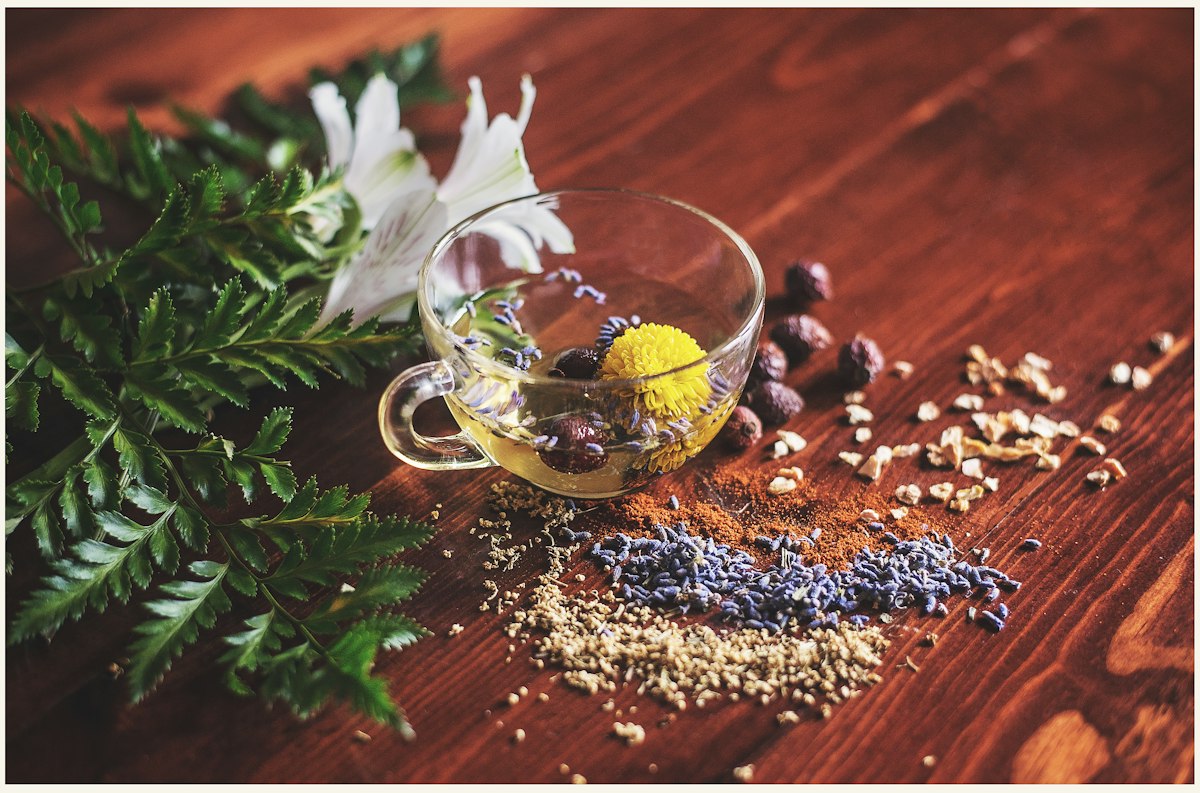
    Tea preparation still life, illustrative editorial photograph – iced chamomile tea

    Why chamomile works so well iced

    Chamomile has a gentle flavour that doesn’t turn bitter or tannic the way some black and green teas can when chilled. That makes it forgiving. You can brew it a little stronger, chill it, and it still tastes smooth. It also pairs easily with citrus, mint, honey and fruit.

    What you need

    • Dried chamomile flowers (loose, or tea bags). If you’re choosing, see our selection of herbal teas.
    • Water
    • Ice
    • A jug or large jar with a lid
    • A fine strainer (for loose flowers)
    • Optional: honey, lemon, fresh mint, sliced fruit

    Method 1: Hot-brew, then chill (fastest)

    Best when you want iced tea within about an hour.

    1. Use a little more chamomile than you would for a hot cup. Ice will dilute the tea, so a good starting point is about 2 teaspoons of dried flowers (or 2 tea bags) per cup (240 ml) of hot water. Adjust to taste next time.
    2. Pour freshly boiled water over the flowers and cover the jug or cup. Covering helps keep the aromatic compounds in the tea rather than letting them escape as steam.
    3. Steep for 5 to 10 minutes. Shorter is milder and sweeter; longer is stronger and can taste more bitter.
    4. Strain and stir in honey now if you want it, since it dissolves best while the tea is warm.
    5. Cool at room temperature for a short while, then refrigerate until cold, about 1 to 2 hours.
    6. Serve over ice with lemon or mint.

    Tip: If you want to chill it quickly, brew a double-strength concentrate with half the water, then pour it over a full glass of ice. The melting ice brings it to normal strength.

    Method 2: Cold-brew (smoothest, least effort)

    Best when you can plan ahead. Cold brewing gives a softer, rounder, less bitter cup.

    1. Put about 2 teaspoons of dried chamomile per cup of cold water into a jar or jug.
    2. Stir, cover and refrigerate for 6 to 8 hours, or overnight.
    3. Strain well, taste, and dilute with a little cold water if it’s too strong.
    4. Serve over ice.

    Cold brewing extracts compounds more slowly than hot water, so the result is typically gentler in flavour. If you want a bolder cup, steep longer rather than adding more flowers.

    Easy flavour variations

    • Lemon and honey: A squeeze of lemon and a spoonful of honey is the classic combination.
    • Mint and cucumber: Very refreshing on a hot day.
    • Peach or apricot: Add a few slices of ripe fruit to the jug while it chills.
    • Ginger: A few thin slices of fresh ginger add warmth, even in a cold drink.
    • Sparkling: Top a half glass of chilled chamomile tea with sparkling water.

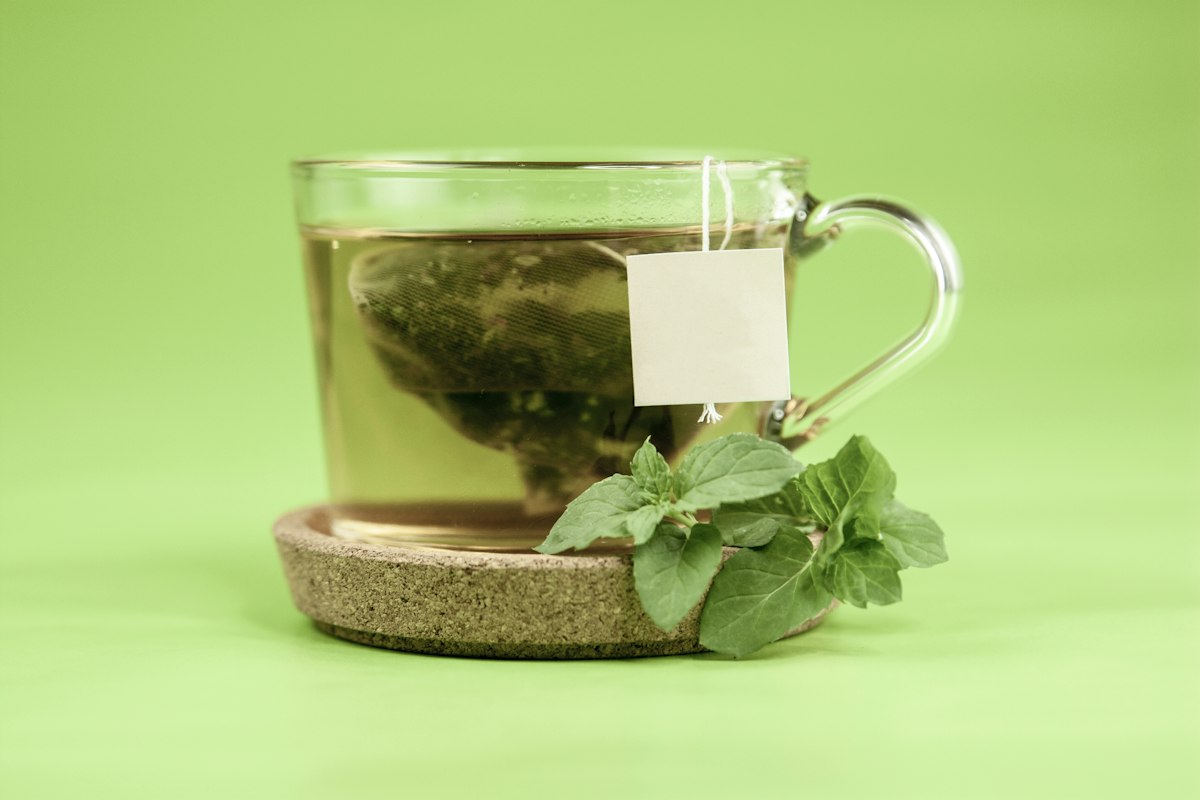
    Dew covered mint leaves – iced chamomile tea

    Storage and safety

    • Keep iced chamomile tea covered in the fridge.
    • As a sensible rule for any homemade infusion, drink it within about 1 to 2 days, and discard it if it smells or looks off.
    • Use clean jars and utensils, and rinse the strainer well. Dried flowers are a natural product.

    Chamomile iced tea benefits: what the research says

    Chamomile tea is among the most popular herbal teas, so there is a lot of talk about its benefits. It helps to separate traditional use, early research and proven effects.

    Important: Iced chamomile tea is a drink, not a treatment. The points below come from reviews and studies on chamomile in general, often using concentrated extracts or different amounts than a cup of tea. Research on chamomile tea specifically is more limited.

    Relaxation and sleep

    Chamomile is traditionally used as a calming evening drink. The U.S. National Center for Complementary and Integrative Health (NCCIH) notes that people use chamomile for sleep and anxiety, but that there is not enough high-quality evidence to draw firm conclusions about its effects in many areas. Some clinical studies, mostly on standardised chamomile extracts, have looked at mild-to-moderate generalised anxiety (for example, Amsterdam et al., 2009, Journal of Clinical Psychopharmacology; Mao et al., 2016, Phytomedicine). They showed some promising results, but they used extracts, not tea, and they don’t show that a glass of iced tea will have the same effect.

    What you can say honestly: the ritual of a warm or cool, caffeine-free drink in the evening may be a pleasant part of winding down.

    Digestive comfort

    Chamomile has a long history of traditional use for upset stomach and mild digestive discomfort. A review by McKay and Blumberg (2006, Phytotherapy Research) and the review by Srivastava et al. (2010, Molecular Medicine Reports) describe chamomile’s traditional uses and laboratory findings. Much of the evidence is preclinical (lab or animal work) or traditional, so it should be treated as suggestive, not conclusive.

    Antioxidant compounds

    Chamomile flowers contain plant compounds such as flavonoids (including apigenin) and essential oils. Reviews describe their antioxidant and anti-inflammatory activity in laboratory settings. This does not automatically translate into a measurable health outcome from drinking tea.

    Hydration without caffeine

    A simple and practical benefit: iced chamomile is a flavourful, caffeine-free, unsweetened (if you skip the sugar) alternative to soft drinks.

    A note on the many “chamomile tea benefits” keywords

    You’ll see claims online about chamomile and skin, blood sugar, immunity, menstrual pain and more. Some of these have small studies behind them, many have only lab evidence, and none should be read as a promise. If a source gives exact percentages or guaranteed results for a cup of tea, treat it with caution.

    Who should be careful

    Herbal doesn’t mean risk-free. Please check with a doctor or pharmacist before drinking chamomile regularly if any of these apply:

    • Allergy to plants in the daisy family (ragweed, chrysanthemums, marigolds, daisies). Chamomile belongs to this family and can trigger allergic reactions in sensitive people. NCCIH lists this as a caution.
    • Taking blood thinners such as warfarin, or other regular medicines. NCCIH notes that chamomile may interact with some medicines, including anticoagulants and cyclosporine.
    • Pregnancy or breastfeeding. Safety data are limited, so it’s best to ask your healthcare provider.
    • Scheduled surgery. Tell your medical team about any herbal products you use.
    • Children. Ask a paediatrician before giving herbal teas regularly.

    If you notice itching, rash, swelling or breathing difficulty after drinking chamomile, stop and seek medical help.

    This article is for general information and is not medical advice.

    Quick recipe card

    Iced Chamomile Tea (serves 2–3)

    • 4 teaspoons dried chamomile flowers (or 4 tea bags)
    • 480 ml (2 cups) freshly boiled water
    • Honey and lemon to taste
    • Ice
    1. Pour hot water over the chamomile, cover, steep 5–10 minutes.
    2. Strain, add honey if using, cool, then refrigerate until cold.
    3. Serve over ice with lemon.

    Cold-brew alternative: chamomile + cold water, refrigerate 6–8 hours, strain.

    Final thoughts

    Iced chamomile tea is a simple, soothing, caffeine-free drink that is easy to make and easy to customise. Enjoy it for its taste and for the small daily ritual it offers, and treat the health claims with realistic expectations. Ready to try it? Browse our herbal teas to find a chamomile that suits you.

    Sources

    1. National Center for Complementary and Integrative Health (NCCIH), “Chamomile” (herbal fact sheet), nccih.nih.gov.
    2. McKay DL, Blumberg JB. “A review of the bioactivity and potential health benefits of chamomile tea (Matricaria recutita L.).” Phytotherapy Research, 2006.
    3. Srivastava JK, Shankar E, Gupta S. “Chamomile: A herbal medicine of the past with bright future.” Molecular Medicine Reports, 2010.
    4. Amsterdam JD et al. “A randomized, double-blind, placebo-controlled trial of oral Matricaria recutita (chamomile) extract therapy for generalized anxiety disorder.” Journal of Clinical Psychopharmacology, 2009.
    5. Mao JJ et al. “Long-term chamomile therapy of moderate-to-severe generalized anxiety disorder.” Phytomedicine, 2016.

  • Make a Collection Browsing Notebook: Separate Preferences from Product Questions

    Make a Collection Browsing Notebook: Separate Preferences from Product Questions

    A collection page can leave you remembering a colour, a container or a name while forgetting which details the page actually supplied. A small browsing notebook helps separate those impressions. Rather than making a shopping list, record what caught your attention, where you saw it and what you would need to understand next.

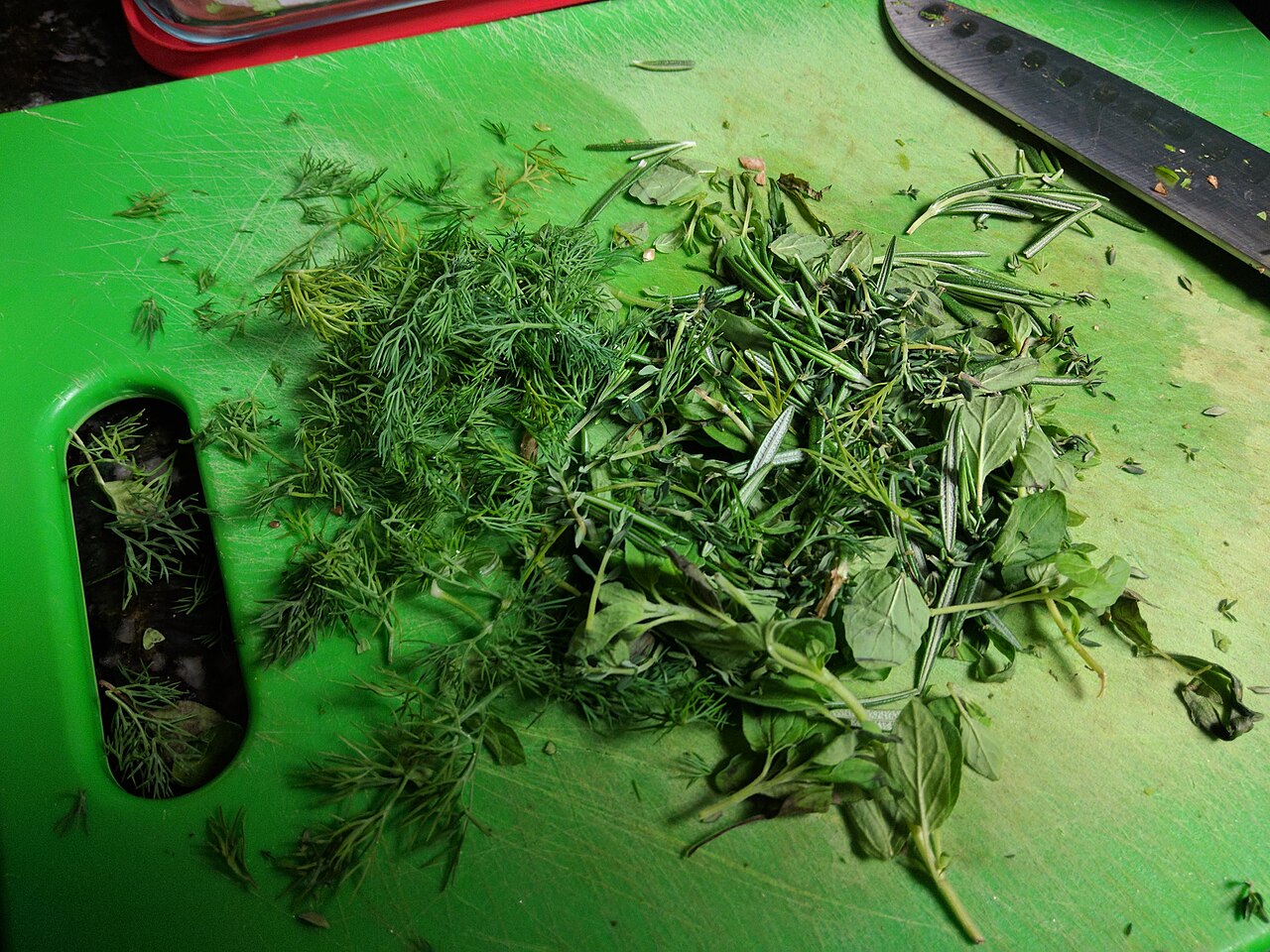
    Illustrative photograph: Chopping Fresh Herbs by Leecason, CC BY-SA 4.0, via Wikimedia Commons. Source preview resized to 1280 × 960; site-generated smaller/cropped or format-converted variants retain this licence. This is not a photograph of a listed property or a business product.

    My Herb House’s current collection is presented as a preview, with illustrative imagery and unconfirmed final products. That makes a question-led notebook a useful way to explore it. The notebook should preserve the difference between a design concept and information about an identified product.

    Give each observation its own place

    Use four columns: page reference, visual preference, information stated and open question. A page reference can be the title and URL. A visual preference might concern the presentation or the way a category is organised. The information column should contain only what the page actually says, without filling gaps from the image.

    Keep the open question short enough to answer separately. “Which details would identify the final product?” is more focused than “Tell me everything.” If a page leaves several matters open, give each one a separate line. This prevents a clear question about identity from becoming mixed with a comment about packaging.

    Describe the design without turning it into a specification

    Words such as colour, layout and illustration describe presentation. They do not establish the contents of a container, its quantity or the identity of a supplier. When writing a note, keep those categories distinct. You can like the appearance of a concept while leaving the product-information column unfinished.

    For example, a hypothetical entry could read: “Collection concept; botanical visual direction; final product details still open; revisit when an identified listing is available.” This is a sample note, not the name or specification of a My Herb House item. Its value is in keeping preference and evidence on different lines.

    Record the source of a detail

    If a page provides a detail, record where it appears and when you read it. A short quotation is unnecessary when a plain summary and page link will do. The reference lets you revisit the original context instead of treating a note copied weeks earlier as a complete description of the current page.

    Use a separate label for your own interpretation. A statement beginning “I would prefer” belongs to your preferences; a statement beginning “The page says” should be traceable to the page. That small writing habit helps you notice when a design impression has become an unsupported assumption.

    Compare questions within the right category

    Keep category-specific questions together. The herbal tea category and botanical extract category organise different formats. The notebook can record which category you were exploring without treating the formats as substitutes or inferring their composition from a shared botanical theme.

    The site already links reading material about how to read a herbal tea label and the distinction between oral strips and capsules. This notebook serves a different purpose: tracking your browsing observations and unanswered questions. Use it to organise references, rather than copying those guides into another format comparison.

    Leave unanswered questions visible

    An empty information field is useful when a detail has not been confirmed. Label it “not stated here” or “awaiting a confirmed listing” rather than completing it from a similarly named item elsewhere. Two concepts with similar names or packaging are not enough to establish the same supplier or specification.

    You can also separate questions that concern product identity from questions that concern an eventual offer. The first group asks what the item is and which information identifies it. The second concerns a supplier, price, availability or sale terms. Keeping the groups apart makes it easier to see which stage the page describes.

    Review the notebook before drawing a conclusion

    Return to the linked pages and remove assumptions that no longer match the text. Keep design preferences in their original column even when product information changes. A dated notebook then shows what you liked, what you learned and what remains unanswered, without suggesting that your earlier impression became a confirmed specification.

    The My Herb House approach and collection FAQ provide the context for further exploration. Finish a browsing session with one clear question to revisit, rather than a conclusion about an unconfirmed product. The notebook is a reading tool, not an order request or guidance on product use.

  • Reading a Latin Plant Name on a Label

    Reading a Latin Plant Name on a Label

    Many herbal labels print a name in italics next to the everyday one, such as Camellia sinensis or Panax ginseng. This Latin plant name can look like decoration. It is actually one of the most precise pieces of identifying information on the packet, but it is only a starting point for reading the label.

    What the two words mean

    A Latin plant name has two main parts. The first word is the genus, a group of closely related plants. The second word, called the specific epithet, combines with the genus to name the species. Together they point to one kind of plant, which an everyday name often cannot do.

    For example, in Panax ginseng, Panax is the genus and ginseng is the specific epithet. Read the pair together rather than treating either word alone as the full identification. In standard botanical writing, the genus begins with a capital letter, the second word is lowercase, and both are italicised.

    Why a label uses a Latin plant name

    Everyday names change from country to country and sometimes from shop to shop. A Latin name gives a seller and a buyer the same starting point. If two products both list Panax ginseng, they name the same plant. That does not make the products identical or independently confirm what is inside them.

    On the Vitastrips range preview, the brand overview lists Camellia sinensis in one product, Panax ginseng in another and Tribulus terrestris in a third. Those names are quoted as the brand states them. Please check the brand’s own pages for the current wording.

    What the name does not tell you

    • The plant part. Leaf, root and seed from the same plant are different materials. A species name alone does not identify which part is listed.
    • The preparation. A dried leaf, an extract and a powder are different forms. The plant name does not explain how the ingredient was prepared.
    • The amount. A name says nothing about how much is present. Look for a separate declared amount and what that amount refers to.
    • Whether the product suits a person. This guide gives general information only, not personal advice. Refer personal questions to a qualified professional.

    How to compare two labels without filling gaps

    Start by copying the full Latin name exactly as printed on each label. Then make separate notes for the plant part, preparation and declared amount. Keeping these fields separate helps you see whether the labels provide comparable information, rather than simply sharing a familiar plant name.

    If one label says “root” and the other gives no plant part, record the second as “not stated”. Do not assume it also means root. Likewise, do not treat a powder and an extract as interchangeable because their Latin names match.

    When an amount is shown, copy its unit and the wording that explains its basis. If that wording is unclear, note the uncertainty rather than making a direct comparison. This is a reading exercise, not a way to decide which product is stronger, better or suitable for you.

    A short label-reading checklist

    1. Find the full Latin name in the ingredient list.
    2. Look for the plant part and preparation beside it.
    3. Record the declared amount, if given, including its unit and basis.
    4. Compare the same fields on the other product.
    5. Mark missing details as missing; do not borrow them from another brand.

    Frequently asked questions

    Does a Latin name confirm the contents?

    No. It tells you which plant the label names; it is not independent verification of the contents. Keep that distinction in mind when reading a label or product document.

    What if I can only find an everyday name?

    Check the full ingredient list and any supplied product information. If the Latin name is still absent, record that gap and ask the supplier for clarification rather than guessing the species.

    Can matching names tell me what suits me?

    No. Matching names do not settle personal suitability. Take the label and your questions to a qualified professional; the guide to preparing questions for a qualified professional offers a starting point.

    Where to go next

    The herbal tea label guide applies the same approach to tea. The botanical extracts page shows how a bottle label separates plant, carrier and strength. The glossary of label claims covers how to distinguish a product name from a claim.

    My Herb House is a collection preview. Nothing described here is for sale, and the images on the site are illustrative.

  • Caffeine and Herbal Tea Labels: What a Label Can and Cannot Tell You

    Caffeine and Herbal Tea Labels: What a Label Can and Cannot Tell You

    People often want to know whether a tea contains caffeine. A packet name rarely settles it. A calm-sounding name, a herbal word on the front or a spiced flavour does not answer the question. Start with the ingredient list, then check any caffeine statement and preparation directions. Reading these details together helps you distinguish what the label tells you from what remains unconfirmed.

    Start with the ingredient list

    Some blends contain leaves from the tea plant, Camellia sinensis, and some are made only from other plants. The name on the front does not separate the two. Read the full list and look at what the base ingredient is.

    If the base is unclear, write that down as a question rather than filling the gap yourself. Keep the full ingredient list alongside your notes: a flavour description or a single highlighted botanical is not a substitute for the complete list.

    Read caffeine statements without adding assumptions

    Look for a clear statement about caffeine where the maker provides one. Copy its wording exactly when comparing products. If no statement appears, record “not stated” rather than treating the omission as confirmation that the tea contains no caffeine.

    Knowing the ingredients and knowing a stated caffeine amount are different things. Do not turn an ingredient name into an exact figure. If a label gives a figure, check what it refers to and whether preparation information accompanies it. If that context is unclear, leave the comparison unresolved and ask the maker for clarification.

    Spiced teas need extra care

    A spiced tea can be built on a tea-plant base or on a different base. The Chai Chai concept page says this plainly: the final blend, its caffeine content and its preparation are not confirmed. That is the right way to treat any concept until a real label exists.

    Use a concept page to understand what is being presented, not to supply missing packet details. A name or flavour description should not become a confirmed ingredient list in your notes.

    What a good label gives you

    • A complete ingredient list.
    • A clear statement about caffeine where the maker provides one.
    • Net contents and preparation directions from the maker.
    • Storage information and a date.

    Read these details together rather than relying on one prominent phrase. Keep the maker’s preparation directions with any caffeine information you record. Note the wording attached to a date rather than guessing what the date means. These are practical reading checks, not a statement about legal labelling requirements.

    A quick comparison method

    When you compare two teas, put the same four lines side by side: base ingredient, other ingredients, caffeine statement and preparation. If one tea has a line and the other does not, note the gap. Do not assume they are the same.

    For each entry, distinguish wording copied from the packet from your own questions. For example, “base ingredient unclear” records a gap without inventing an answer. If you only have a web description for one tea and a packet for another, note that difference too.

    Short label-reading checklist

    • Read beyond the front name to the full ingredient list.
    • Record the caffeine statement exactly, or mark it “not stated”.
    • Keep preparation directions alongside your comparison.
    • Check net contents, storage information and date wording.
    • Separate confirmed details from unanswered questions.

    What a label cannot do

    It cannot decide how much of anything suits you. This guide is general information only. Questions about caffeine and your own circumstances belong with a qualified professional. You can use the guide to preparing questions for a qualified professional to organise what you want to ask, alongside the label and any missing details.

    Frequently asked questions

    Does a herbal tea name tell me whether it contains caffeine?

    No. Start with the full ingredient list and check any caffeine statement. The front name alone does not settle the question.

    What if caffeine information is missing?

    Record the information as missing and ask the maker for clarification. Do not turn an absent statement into a conclusion about caffeine content.

    Can I use a concept page instead of a final label?

    Not to confirm final ingredients, caffeine content or preparation when those details remain unconfirmed. Keep the concept description separate from final product information.

    Where to go next

    The tea label guide covers the wider label. The Herbal Teas page lists the tea concepts, and the FAQ explains what the preview does and does not establish.

    My Herb House is a collection preview. Nothing described here is for sale.

  • Allergen Information on Tea and Supplement Labels: Where to Look

    Allergen Information on Tea and Supplement Labels: Where to Look

    Allergen information is one of the most useful lines on a packet, and one of the easiest to skip. This guide explains where to look on tea and supplement labels, what missing information means, and how to avoid guessing. Start with the exact product rather than assumptions about its name, brand or format.

    Look at the exact product

    An allergen statement belongs to one product. A different flavour from the same brand, or a similar product elsewhere, can differ. Read the label of the product in your hand or on the page you are comparing.

    When checking an online listing, match the product name, flavour and format to the item you mean to assess. If a label photograph is cropped or too small to read, record the information as unavailable rather than filling in the gaps from another listing.

    Where allergen information usually appears

    The European Commission publishes the rules on food information to consumers, which cover how ingredients and allergens are shown on food labels. See the Commission’s food information page for the current framework. In practice, check three places:

    1. The ingredient list, where allergenic ingredients are normally made to stand out in some way.
    2. Any separate allergen line near the list.
    3. Any wording about other foods handled in the same place, if the maker gives it.

    Read these areas together. Do not stop at a prominent statement on the front of the packet or assume that a separate allergen line replaces the ingredient list. If you are comparing products, copy the exact wording into your notes so you can distinguish what the label says from your own interpretation.

    Capsules and strips: check each part

    A capsule has contents and a shell. A strip has a film and a flavouring. Each part can carry its own ingredients. The capsule concept page says that vegetarian, vegan or allergen-free suitability cannot be inferred from packaging. The same is true for any product.

    Look for information covering the whole item, not just its featured botanical ingredient. If the description mentions a shell, film or flavouring without explaining its ingredients, note that as a question. The guide to oral strips and capsules offers more context on what the format can tell you; format alone does not settle suitability.

    When the information is missing

    If a page or packet gives no allergen information, treat it as missing, not as a sign that there are no allergens. Ask the seller or the maker. On this site no real product exists yet, and the concept pages say what they would need before an offer could be made.

    Make your question specific: identify the product and ask for its complete ingredient list, allergen statement and any available wording about other foods handled in the same place. If the packet and webpage differ, ask which information applies to the item you are checking. Do not choose whichever version seems more reassuring.

    A short label-checking checklist

    • Match the exact product, flavour and format.
    • Read the complete ingredient list and any separate allergen line.
    • Check for wording about other foods handled in the same place.
    • Include the capsule shell or strip ingredients in your check.
    • Write down missing, unreadable or conflicting details and ask for clarification.

    Personal advice

    This guide is general information only. It is not allergy advice. If you have an allergy or a medical condition, a qualified professional is the right person to ask. Bring the exact label wording and any unanswered questions rather than relying on a product summary. Our guide to preparing questions for a qualified professional can help you organise that conversation.

    Frequently asked questions

    Does a missing allergen line mean there are no allergens?

    No. Missing information is not confirmation of absence. Check the ingredient list and ask the seller or maker about anything unclear.

    Can I use another flavour’s label as a guide?

    Do not use it to establish suitability. Different flavours or similar products can differ, even within the same brand. Check the exact item.

    Can the packaging tell me whether a product is suitable?

    Not by appearance alone. Read the product-specific information, seek clarification where needed, and refer personal allergy questions to a qualified professional.

    Where to go next

    The tea label guide shows the other fields to check. The FAQ explains what the preview does and does not establish.

    My Herb House is a collection preview. Nothing described here is for sale.

  • Preparing questions for a qualified professional

    Begin with the question, not a conclusion

    If a botanical description raises a question about suitability, safety or an intended effect, an educational page should not be used to settle it. Start by writing the question in ordinary language. Avoid deciding in advance that a product is suitable or that a claim must be true. This article helps prepare a conversation; it does not recommend an item, diagnose a condition or give instructions about herbs, supplements or devices.

    Bring the exact document you are asking about

    A name remembered from a website can omit important context. Keep the original label, page or document available so the professional can see the wording being discussed. Identify whether it is a concept image, a general guide or material associated with a supplied item. If the status is unknown, say so. Do not assume that a similarly named product elsewhere has the same description or that a format alone answers the question.

    Write down the uncertainties

    Separate questions about terminology, identity and evidence from questions about personal suitability. For example, a phrase may be unclear even before any individual decision is considered. Record what you do not know rather than filling the gap with a search result. Keep the list short enough for a focused conversation. A useful question identifies the statement at issue and why it is unclear, without embedding an unsupported promise in the wording.

    Keep personal information in the appropriate setting

    A conversation with a professional may require personal context that does not belong in a public comment, shared content brief or chat with a general-purpose service. Ask how necessary information should be provided through the professional’s normal process. Do not publish private records to obtain an answer. This worksheet can organise public document questions without collecting sensitive details or pretending to replace the professional’s own assessment.

    Ask how an answer is supported

    Request a plain-language explanation of the answer and its limits. If a claim cannot be evaluated from the available document, identify what is missing. A careful answer may leave some points unresolved. Do not translate a general explanation into an instruction for a particular person or item unless the professional has actually addressed that situation. Keep any follow-up within the scope they have identified rather than treating the conversation as universal approval.

    Make a neutral note after the discussion

    Record the question answered, any remaining uncertainty and the suggested next step, if one was given. Avoid editing the note to sound more decisive than the answer. A dated note can help you remember what the conversation covered, but it is not an endorsement for other people to rely on. Before sharing anything, consider whether it contains personal information and whether the recipient needs it.

    Leave catalogue status separate

    MyHerbHouse’s concepts and educational pages do not establish a purchasable item or evidence for an effect. Preparing good questions does not change that status. Nor does a professional discussion certify an entire collection. Keep the boundaries clear: this article supports organisation and communication, while individual suitability and any necessary professional judgement remain outside its role. No use, preparation, dosing or inhalation instructions are provided here.

  • Illustrative packaging versus a supplied product

    Recognise the purpose of a concept image

    An illustrated package can show a proposed visual direction, a naming idea or a way to arrange information. It can be useful without representing a supplied product. The first question is therefore not whether the image looks convincing, but what status the publisher gives it. If that status is unclear, keep the uncertainty visible. This guide concerns communication and document reading, not a decision to buy or use a botanical item.

    Separate visual detail from established facts

    An image may include a name, a container shape and decorative text. None of these details independently establishes the contents, the manufacturer or availability. A realistic rendering can make assumptions feel like observations, so write down only what is actually shown. Describe a visible design as a visible design. Do not expand it into a claim about composition, performance, dosing, safety or a completed compliance process.

    Look for a clear status statement

    A useful presentation identifies whether it is a concept, an example, a prototype or a current supplied item. These labels should be applied accurately rather than used interchangeably. A concept page can explain the idea being explored while stating that the product details are not established. If a description mixes future intentions with present-tense availability, ask for clarification. Do not resolve that ambiguity by assuming the item can be purchased.

    Compare the image with its accompanying text

    Read the caption and nearby description together. A carefully limited caption can be undermined by an unsupported claim elsewhere on the page. Equally, a striking name should not be interpreted as a promise that the text does not actually make. Keep a record of the precise statement that needs clarification. This is more useful than assessing the package as trustworthy or untrustworthy based only on its visual style.

    Identify what would need a separate record

    Facts about a supplied item require information that relates to that item, not merely the design presentation. Its identity, actual description and source should be distinguished from branding decisions. Questions concerning an intended effect or suitability require an appropriate professional discussion; they cannot be answered by making the mockup more detailed. A concept does not become a verified item because the artwork includes more technical-looking language.

    Keep feedback within the design scope

    When commenting on a concept, focus on whether the status is understandable, the wording is readable and the distinction between illustration and fact is clear. Avoid suggesting invented certifications, testimonials or scientific claims to make the package feel complete. If the design is being considered for another use, identify that new use before changing its description. Accuracy is a requirement of the presentation, not a decorative element that can be added later.

    Preserve the distinction on MyHerbHouse

    MyHerbHouse’s conceptual collection should not be represented as a confirmed range of purchasable products. Existing educational guides and proposed packaging ideas can remain useful while supply, formulation and efficacy questions are unresolved. Do not infer a shopping route or availability from an image alone. The responsible outcome is a clearer explanation of what the visitor is seeing and which facts have not yet been established.

  • Batch identity and source questions for product documents

    Define the object of your question

    A general catalogue page and a document accompanying a particular item may describe different things. Begin by stating which one you are examining. If the item exists only as an illustration or concept, record that status clearly. This article explains how to organise identity and source questions. It does not verify a manufacturer, a botanical material, a supplied product or a permission to sell it, and it offers no instructions for use.

    Record identifiers without inventing missing details

    Note the identifiers that are actually present, such as the displayed name, document date or an explicitly printed reference. An absent identifier remains absent. Do not create a batch number from an order reference or assume that a photograph represents the item being discussed. Where personal or transaction information appears nearby, avoid copying it into a shared worksheet unless it is genuinely necessary and its handling has been authorised.

    Ask how the description relates to the specific item

    A statement on a website may describe a collection generally rather than a particular version. Ask which document applies and whether a later description replaced an earlier one. Two pages using similar language are not necessarily independent confirmation. Keep each source attached to the statement it supports. If no one can explain the relationship between the description and the item, record the gap instead of treating the more detailed document as automatically authoritative.

    Separate origin information from quality conclusions

    Information about a source can help identify what someone is claiming, but it does not by itself prove composition, quality or suitability. A location, a brand story or attractive packaging should not be converted into a scientific conclusion. Likewise, a document with a technical appearance is not automatically a verified report. Ask who produced it, what it actually covers and whether it is relevant to the specific question, without pretending those answers are already known.

    Prepare a concise question list

    Focus on a few unresolved points: which description applies, who can confirm the stated identity, and what supporting information is available for a particular claim. Keep requests proportionate and avoid asking for unrelated personal records. Do not request a supplier’s credentials or private account access as a shortcut to explanation. If a statement concerns safety or an intended effect, route the question to an appropriately qualified professional rather than drawing a conclusion from the source record alone.

    Maintain a record of what remains unknown

    A simple record can distinguish displayed information, answers received and open questions. Include dates so later changes can be recognised. An unanswered question is not proof of wrongdoing, and an answer is not necessarily independent verification. This distinction helps prevent both unwarranted suspicion and unwarranted confidence. It also makes a follow-up discussion more focused because the reader can see exactly which point still requires clarification.

    Keep the outcome modest

    The result of this exercise is a better organised evidence trail, not a product recommendation or certification. MyHerbHouse’s concepts remain concepts unless a separate, accurate supply and product record establishes otherwise. Do not infer availability, formulation, efficacy or legal compliance from a completed worksheet. The useful next step is a clearer question supported by the documents you actually have.

  • Reading botanical label claims: a cautious glossary

    Start by identifying the document

    A botanical label can contain several kinds of information, and they do not all answer the same question. Before interpreting a phrase, identify whether you are looking at a supplied item, an illustration, a catalogue concept or an example used in an article. A polished design does not establish that a product is available. This guide offers a way to organise the wording, not advice about selecting or using a herb or supplement.

    A name is not evidence of an effect

    A product or collection name may suggest a theme without demonstrating any particular result. Treat names and slogans as names and slogans. Do not translate an evocative phrase into a statement about the body or a promised benefit. If an explanation makes an effect sound certain, identify the precise statement and the evidence needed to support it. Where that evidence is absent, keep the claim unresolved rather than making it more persuasive.

    Separate an ingredient description from a claim

    An ingredient list, a botanical term and a statement about an intended effect serve different purposes. Recording a term accurately is not the same as confirming the identity, composition or suitability of the item. A reader can note which details appear and which are missing without drawing a conclusion about use. If a term is unclear, preserve the original wording and prepare a question instead of guessing what the writer meant.

    Keep format language in its own category

    Words describing a tea, capsule, extract or strip identify a format or a proposed format. They do not by themselves establish equivalence between items, a strength or a recommended amount. A format comparison can describe the information a reader should look for while leaving those questions unanswered. Avoid assuming that similarly named concepts contain the same material. No instruction about preparation, combination, frequency or administration follows from the format alone.

    Make a small glossary with visible uncertainties

    A useful personal glossary has columns for the exact phrase, its role in the document, the source and the question it raises. Mark an interpretation as tentative. If a description lacks a supporting source, record that absence. This approach makes it easier to discuss confusing wording without turning a note into an endorsement. It also avoids copying a confident explanation from another site as though it were verified for the item in front of you.

    Use the glossary to prepare a conversation

    Bring the original document and your focused questions to an appropriately qualified professional when the question concerns suitability, safety or an effect. Do not treat this article as a substitute for that discussion. The purpose is to improve the clarity of the question, not to decide what to take. MyHerbHouse’s conceptual collection and educational material do not establish a purchasable product, a formulation, an efficacy result or a compliance finding.

    Check what you have actually learned

    At the end, distinguish information you transcribed from conclusions someone has independently established. A clearer vocabulary is useful even when important questions remain unknown. Keep the glossary dated and update it when the underlying document changes. Do not use a completed checklist as a badge of approval: careful document reading organises uncertainty, but it cannot eliminate it or certify the item.